Complete Digital Marketing Roadmap for Small Businesses
A clear digital marketing roadmap can help small businesses grow without wasting time or money. In 2026, customers in India are discovering brands through search, social media, video, and maps before they ever make contact. If a business does not have a plan, it can easily fall behind competitors that are more visible online.
The goal of a digital marketing roadmap is not to do everything at once. It is to focus on the right steps in the right order so your business can build visibility, trust, and leads. For small businesses, that usually means starting with the foundation, then moving into traffic, engagement, and conversion.
Step 1: Build the foundation
Every digital marketing plan should start with the basics. That means a professional website, a clear brand message, contact details, and strong service pages. Without this foundation, marketing traffic will have nowhere useful to go.
A website should explain what your business does, who it helps, and how customers can contact you. If you serve a local area, your address, phone number, map, and service locations should also be easy to find. This is the base of any strong small business digital marketing strategy.
Step 2: Set one clear goal
Before spending on ads or content, decide what you want to achieve. You may want more calls, more form submissions, more online sales, or more store visits. A roadmap works best when the goal is specific.
If your goal is too broad, the rest of the strategy becomes hard to measure. A small business should choose one primary goal first and then build campaigns around it. That keeps the strategy simple and easier to track.
Step 3: Know your audience
Digital marketing works better when you understand who you are speaking to. You need to know what your customers search for, what problems they have, and where they spend time online. This helps you choose the right content and channels.
A local service business may need search and maps. A product business may need social media and video. A professional service business may need SEO and LinkedIn. Audience clarity saves time and improves results.
Step 4: Focus on local visibility
For many small businesses in India, local visibility is the fastest way to get leads. People often search for services near them, compare a few options, and contact the business that looks trustworthy. That is why local SEO and Google Business Profile are so important.
Make sure your business information is consistent across your website and listings. Add photos, reviews, services, and regular updates. This helps customers find you and increases your chances of being chosen.
Digital Marketing Roadmap
Step 5: Create useful content
Content helps people understand your business before they contact you. This can include blog posts, service pages, FAQs, social media posts, videos, and case studies. Good content answers common questions and builds trust.
A strong content plan should focus on what people actually want to know. For example, pricing, comparisons, benefits, and how-to topics usually perform well. Content is one of the most cost-effective parts of a digital marketing roadmap.
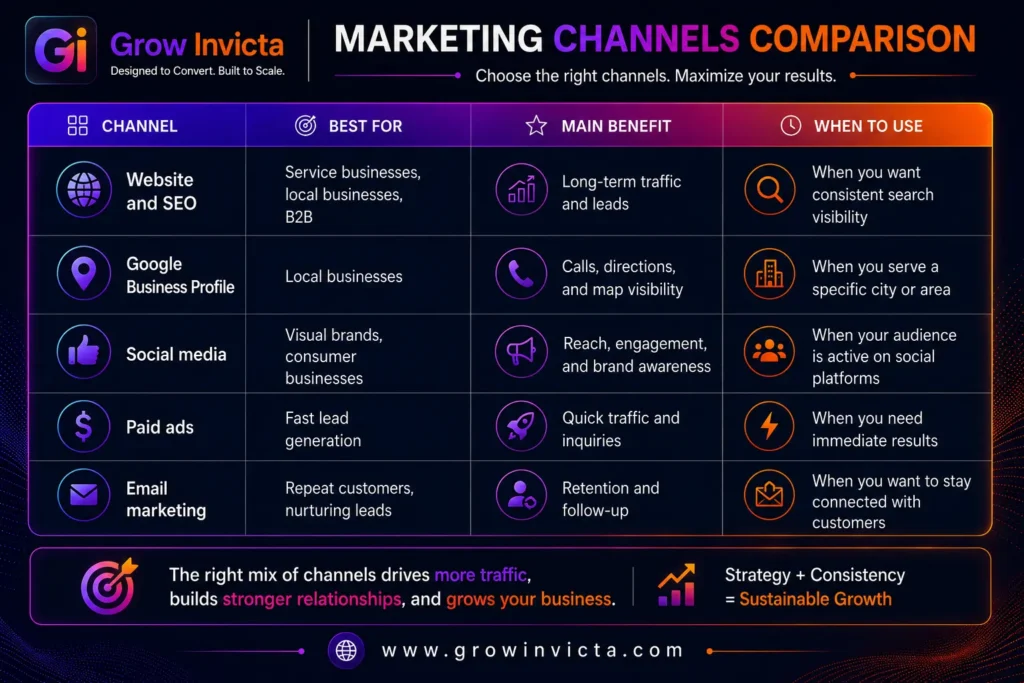
Step 6: Use the right channels
Not every business needs every platform. You should choose channels based on your audience and your goals. A simple channel mix is usually better than spreading effort too thin.
Digital Marketing Roadmap
A small business does not need to do all of these at once. The best approach is to start with the channels that match your business model and build from there.
Step 7: Use paid ads carefully
Paid ads can help small businesses grow faster, but only if the basics are already in place. If your website or offer is weak, ads may bring traffic without results. That is why ads should support the strategy, not replace it.
For many businesses, search ads and local lead ads are a good starting point. Social ads can work well for awareness and remarketing. The key is to test carefully and track results closely.
Step 8: Track results regularly
A digital marketing plan is only useful if you measure performance. You should know how many visitors, leads, calls, and sales your efforts are generating. Without tracking, it is hard to know what is working.
Review your numbers every month and make small improvements. If one channel is performing well, put more effort there. If another channel is not producing results, change the message, audience, or offer.
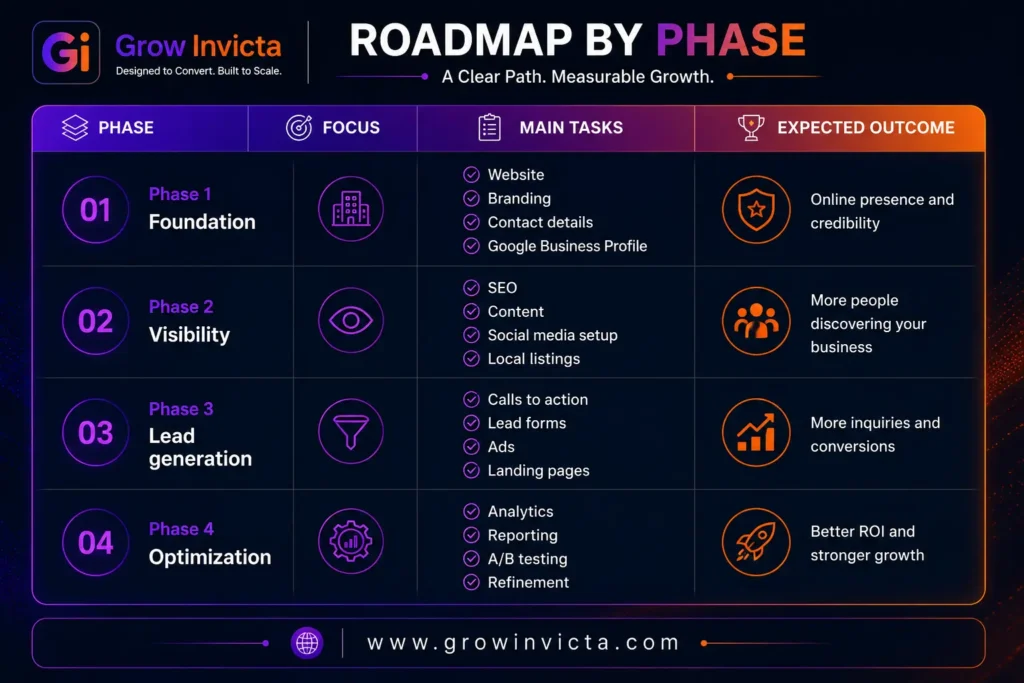
Roadmap by phase
Digital Marketing Roadmap
This phased approach makes the process easier for small businesses. Instead of trying to do everything at once, you build one layer at a time. That reduces confusion and improves consistency.
Final Thoughts
A digital marketing roadmap helps small businesses in India grow in a practical and organized way. The best plan starts with a strong website, then adds local visibility, useful content, the right channels, and regular tracking. In 2026, businesses that stay consistent will usually outperform those that post randomly or spend without a plan.
If you want better results, keep the strategy simple and focused. A clear roadmap is often more powerful than a long list of disconnected marketing activities.
Digital Marketing Roadmap
Frequently Asked Questions
1. What is a digital marketing roadmap?
It is a step-by-step plan for using online channels to grow visibility, leads, and sales.
2. Why do small businesses in India need digital marketing?
Because customers search online first and compare brands before buying.
3. Which channel should I start with first?
For many small businesses, a website, SEO, and Google Business Profile are the best starting points.
4. Do small businesses need paid ads?
Not always, but they can help if you need faster results.
5. How often should I review marketing results?
A monthly review is a good starting point for most small businesses.
6. Should I post on every social media platform?
No, it is better to focus on the platforms your audience actually uses.
7. Why is content important?
Content helps customers understand your business and builds trust.
8. Can a small business grow without a big budget?
Yes, if it focuses on the right channels and stays consistent over time.