
If you are asking, should my hospital website be mobile-friendly, the answer is an absolute yes. Today, the vast majority of patients use their smartphones to search for doctors, read clinic reviews, and book consultations. A mobile-responsive design ensures your site adapts perfectly to any screen size, providing a seamless patient experience. Furthermore, search engines like Google heavily prioritize mobile-friendly websites. Implementing this crucial feature directly improves your local SEO, helps you outrank competing clinics, and turns casual mobile searchers into booked patients.
Should my hospital website be mobile-friendly?
Yes, your hospital website must be mobile-friendly. Over 60% of local healthcare searches are performed on smartphones. A mobile-responsive design is essential because it drastically improves the patient experience, increases appointment booking rates, and is a mandatory requirement for ranking high on Google’s search engine results pages.
Should My Hospital Website Be Mobile-Friendly? Why It Matters
The healthcare industry has undergone a massive digital transformation over the past decade. When someone falls ill, needs a specialist, or faces a medical emergency, their first instinct is no longer to reach for a physical phone book. Instead, they grab their smartphone and search for a doctor nearby. Because of this behavioral shift, practice owners and administrators frequently ask: should my hospital website be mobile-friendly?
The short answer is yes. A hospital website that is not optimized for mobile devices is actively turning patients away. In this comprehensive guide, we will explore why mobile optimization is a non-negotiable feature for modern healthcare providers, how it impacts your search engine rankings, and why it is the most critical factor in improving your patient experience online.
The Shift to Mobile Healthcare Searches
Understanding the importance of mobile design starts with understanding your patients. Over 60% of all internet searches now occur on mobile devices, and this number is even higher for local, service-based queries like “pediatrician near me” or “best orthopedic hospital in Bangalore.”
When a patient is searching for medical care on the go, they expect immediate answers. They want to find your phone number, your clinic address, and your list of services within seconds. If your website was built exclusively for a desktop computer, a mobile user will be forced to pinch, zoom, and squint just to read your text. This friction instantly diminishes trust, pushing the patient straight to a competitor’s website.
Why The Answer to “Should My Hospital Website Be Mobile-Friendly” is Yes
When you invest in professional web design services, mobile responsiveness should be at the core of the strategy. Here are the primary reasons why your healthcare facility must embrace a mobile-first approach.
Improving the Patient Experience
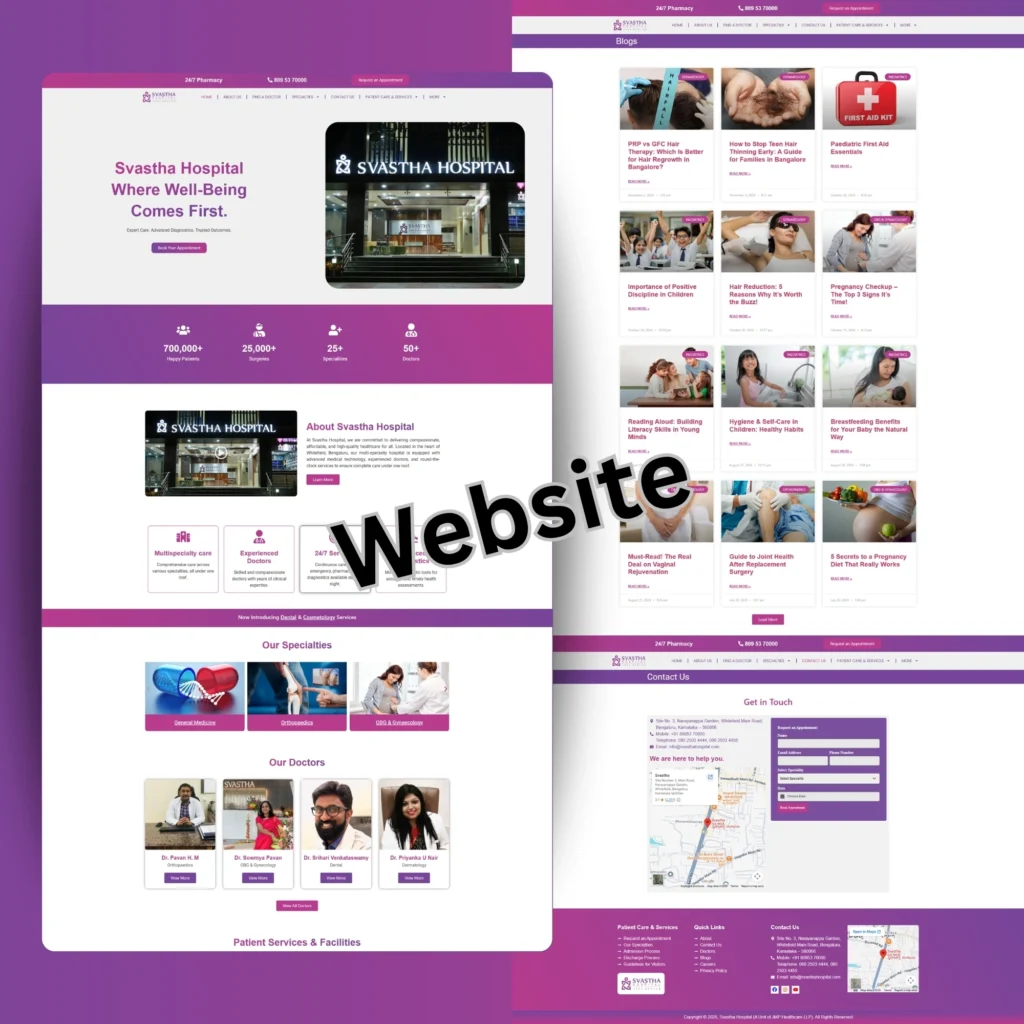
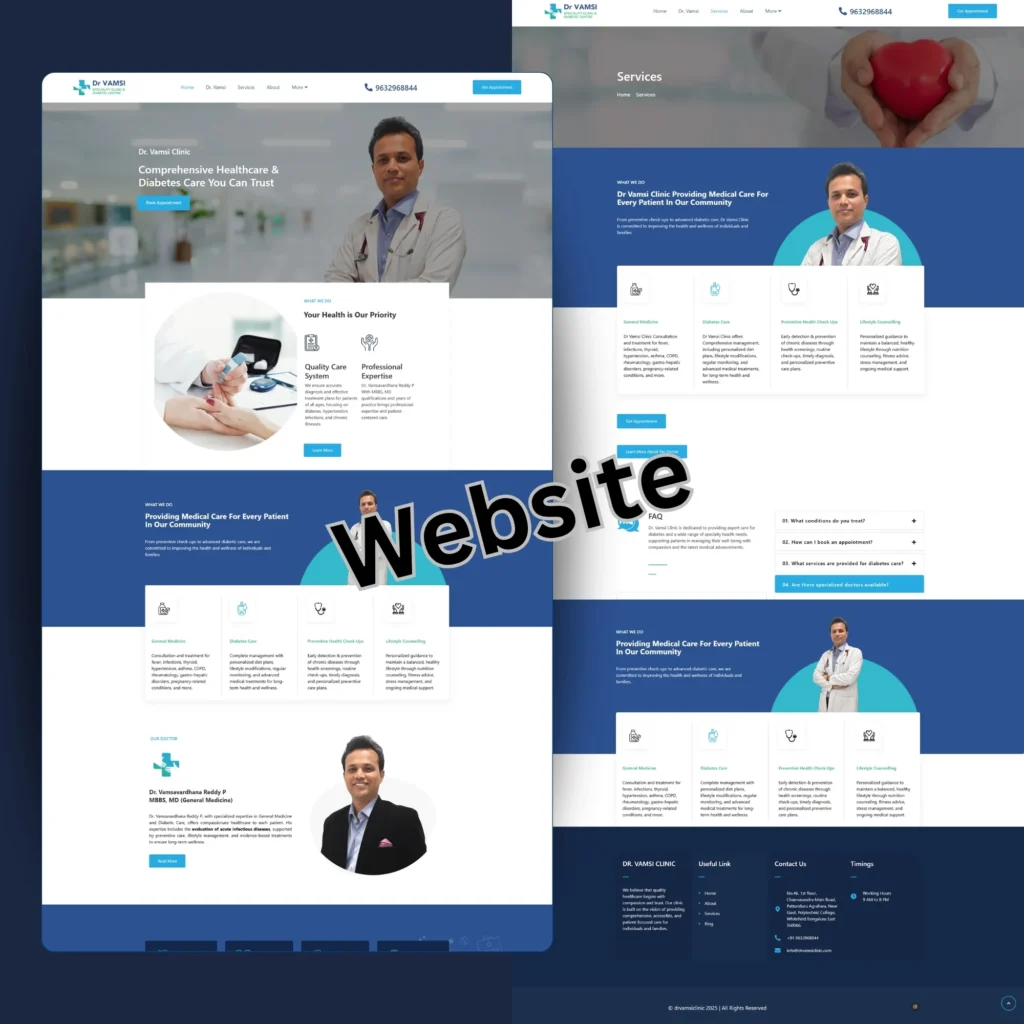
In healthcare, trust and credibility are everything. Your website is often the first interaction a patient has with your hospital. A clean, mobile-responsive design demonstrates professionalism and care. It ensures that text is legible, menus are easy to navigate with a thumb, and images scale perfectly to fit the screen. When you provide a frictionless digital experience, you subconsciously signal to the patient that your physical medical care will be just as seamless and modern.
Boosting Local SEO and Visibility
Search engines are deeply invested in providing the best results for their users. Because most users are on mobile, Google uses “mobile-first indexing.” This means Google predominantly uses the mobile version of your content for indexing and ranking. If your hospital website is not mobile-friendly, Google will actively penalize your site, pushing you down in the search results.
To rank for highly competitive keywords and bring in qualified enquiries, your site must be fast, secure, and mobile-friendly. Investing in foundational SEO alongside responsive design is the only way to ensure local patients can find you.
Enabling Seamless Patient Appointment Booking Features
The ultimate goal of your hospital website is to help patients get the care they need. A mobile-friendly site integrates patient appointment booking features flawlessly. It allows for highly visible “Click-to-Call” buttons, meaning a patient can dial your reception desk with a single tap. Furthermore, mobile-optimized contact forms are easier to fill out, drastically increasing the chances that a user will complete their booking online instead of abandoning the page.
What Happens If Your Healthcare Website Is Not Mobile-Friendly?
Failing to update your hospital website for mobile users carries severe consequences for your business growth.
- High Bounce Rates: Visitors will leave your site within seconds if it is difficult to navigate on their phone.
- Loss of Trust: An outdated, broken mobile site looks unprofessional and can make patients question the quality of your medical technology.
- Wasted Marketing Budget: If you are running paid ads or social media campaigns, you are likely directing mobile traffic to your site. Sending them to a non-responsive page means you are paying for clicks that will never convert into actual appointments.
How Much Does a Healthcare Website Cost?
Many doctors hesitate to upgrade their digital presence because they are unsure about the healthcare website cost. The good news is that achieving a mobile-friendly, high-converting digital storefront is more accessible than ever.
For individual clinics, small healthcare practices, and personal doctor brands, professional website design services start at just ₹19,999 (or $289). This foundational package ensures you receive a high-performing asset that includes:
- A minimum of 5 pages (Home, About Us, Services/Treatments, Blog, Contact).
- 100% responsive, mobile-friendly design.
- Complete SEO optimization.
- A clean, professional UI tailored for patients.
- Note: Yearly hosting to keep your site secure and live is charged separately, averaging around ₹8,000 (or $129).
By viewing your website as a 24/7 digital reception desk rather than a simple expense, you can ensure sustainable growth without relying heavily on paid ads.
Frequently Asked Questions
1. Should my hospital website be mobile-friendly if most of my patients are older?
Absolutely. Smartphone adoption among older demographics has skyrocketed. Furthermore, it is often the adult children of elderly patients who are using their mobile phones to research and book specialists for their parents.
2. What is the difference between a mobile-friendly site and a responsive site?
A mobile-friendly site looks the same on a phone as a desktop but is shrunken down, which is often hard to read. A responsive site automatically adjusts its layout, text size, and menus to perfectly fit the specific device being used, offering a superior experience.
3. Does mobile optimization really affect my SEO?
Yes. Google explicitly states that mobile-friendliness is a significant ranking factor. If your site is not optimized for mobile, competitors who have responsive sites will easily outrank you.
4. How long does it take to design a responsive healthcare website?
For a standard 5-page clinical website, professional agencies typically take 2 to 4 weeks to complete the strategy, design, and SEO optimization.
5. Are appointment booking features included in the design?
Yes, a good web design company will ensure your contact forms and phone numbers are optimized for mobile, making it incredibly easy for a patient to book a consultation with a single tap.
Conclusion
If you started out wondering, should my hospital website be mobile-friendly, the evidence clearly shows that it is a fundamental requirement for modern medical practices. From enhancing local SEO to providing a compassionate, stress-free user experience for sick patients, responsive design is the bridge between a casual online search and a booked appointment. By investing in a professional, mobile-optimized digital presence, you establish your clinic as a modern, trustworthy, and accessible healthcare provider.