

If your website is not showing up on Google, there is usually a reason behind it. In most cases, the problem is not one big issue but a mix of small mistakes that hurt visibility over time. The good news is that these problems can usually be fixed once you know what to look for.
Understanding why your website isn’t ranking on Google starts with checking the basics first. Search engines need to crawl your site, understand your content, and trust that your pages are useful. If any of those parts are weak, your rankings can suffer.
1. Your Pages Are Not Indexed
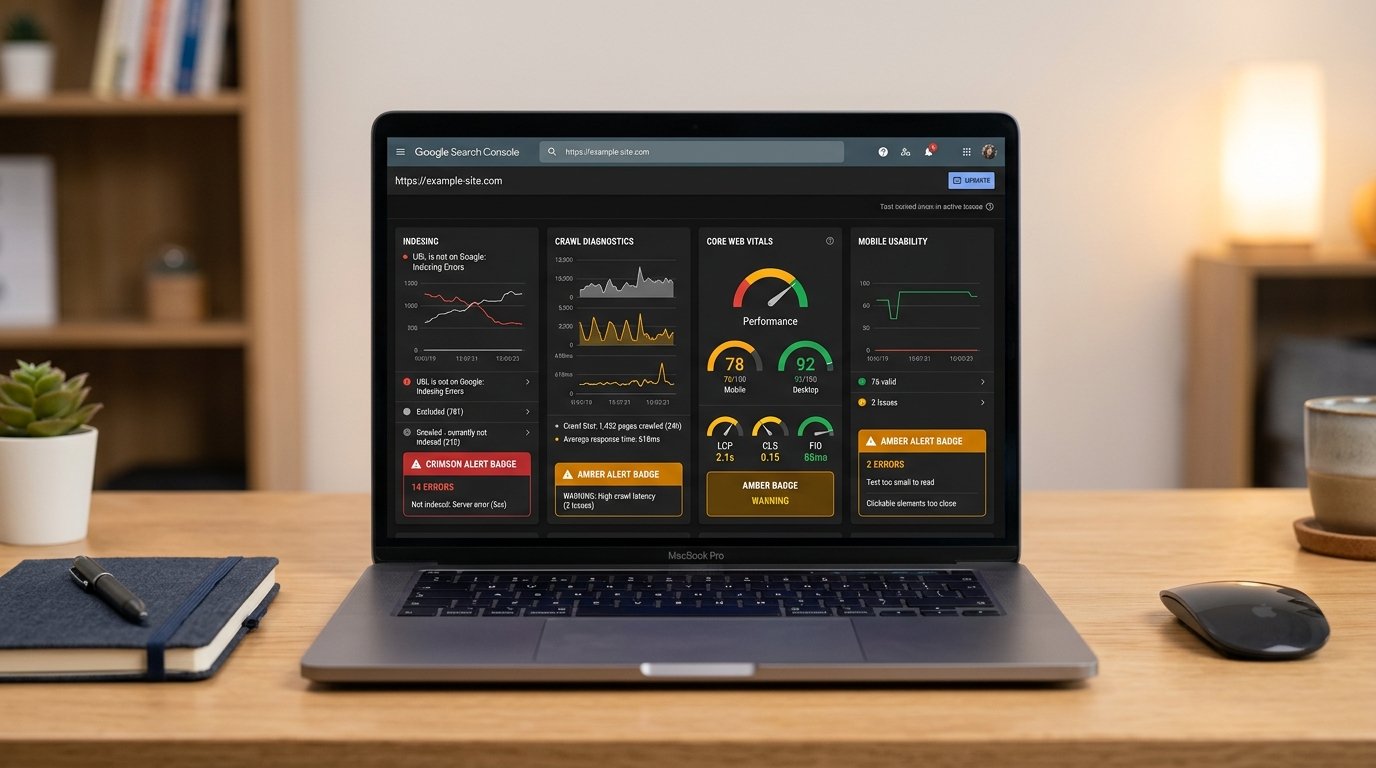
One of the most common problems is that Google has not indexed your pages properly according to official Google Search Central guidance on missing pages↗. If a page is not indexed, it cannot rank in search results. This is often caused by technical errors, no-index tags, or poor site setup.
If your pages are not appearing at all, indexing should be the first thing to check. This is a basic but critical part of SEO. A page cannot rank if Google has not added it to its search index.
2. Your Site Is Too Slow
Website speed matters because users do not like waiting, and search engines notice poor performance too. A slow website can lead to higher bounce rates and weaker user experience. That can hurt your chances of ranking well.
Large images, weak hosting, too many scripts, and poor optimization often cause speed issues. Fixing load time is one of the easiest ways to improve how users and search engines see your site. Speed is not the only ranking factor, but it is an important one.
3. Your Mobile Experience Is Weak
Most people browse on phones now, so mobile optimization is essential. If your site looks broken or hard to use on mobile, visitors may leave quickly. That sends a bad signal about user experience.
Search engines also prefer websites that work well on smaller screens. A site that is not mobile-friendly may struggle to perform even if the desktop version looks good. Mobile-first design is no longer optional.
4. Your Content Is Thin
Thin content means the page does not give enough useful information. If a page is too short, vague, or shallow, it may not deserve to rank above stronger pages. Search engines want content that answers the user’s question properly.
This is one major reason why your website isn’t ranking on Google. Pages should be clear, helpful, and relevant to the search intent. A page with little value is unlikely to compete well.
5. Your Content Is Duplicated
Duplicate content can confuse search engines. If several pages say almost the same thing, Google may not know which one to rank. That can weaken the visibility of all those pages.
This issue often happens on service pages, product pages, or copied website templates. Each important page should have its own purpose and unique wording. Unique content helps search engines understand the value of each page.
6. You Are Targeting the Wrong Keywords
Ranking for the wrong keywords will not bring the right traffic. You may get visitors who are not interested in your service, or you may try to compete for terms that are too broad. Either way, the results are weak.
Good keyword targeting should match what your ideal customer actually searches. Focus on terms with clear intent and realistic competition. If the keyword is too generic, your content may get buried.
7. Your On-Page SEO Is Weak
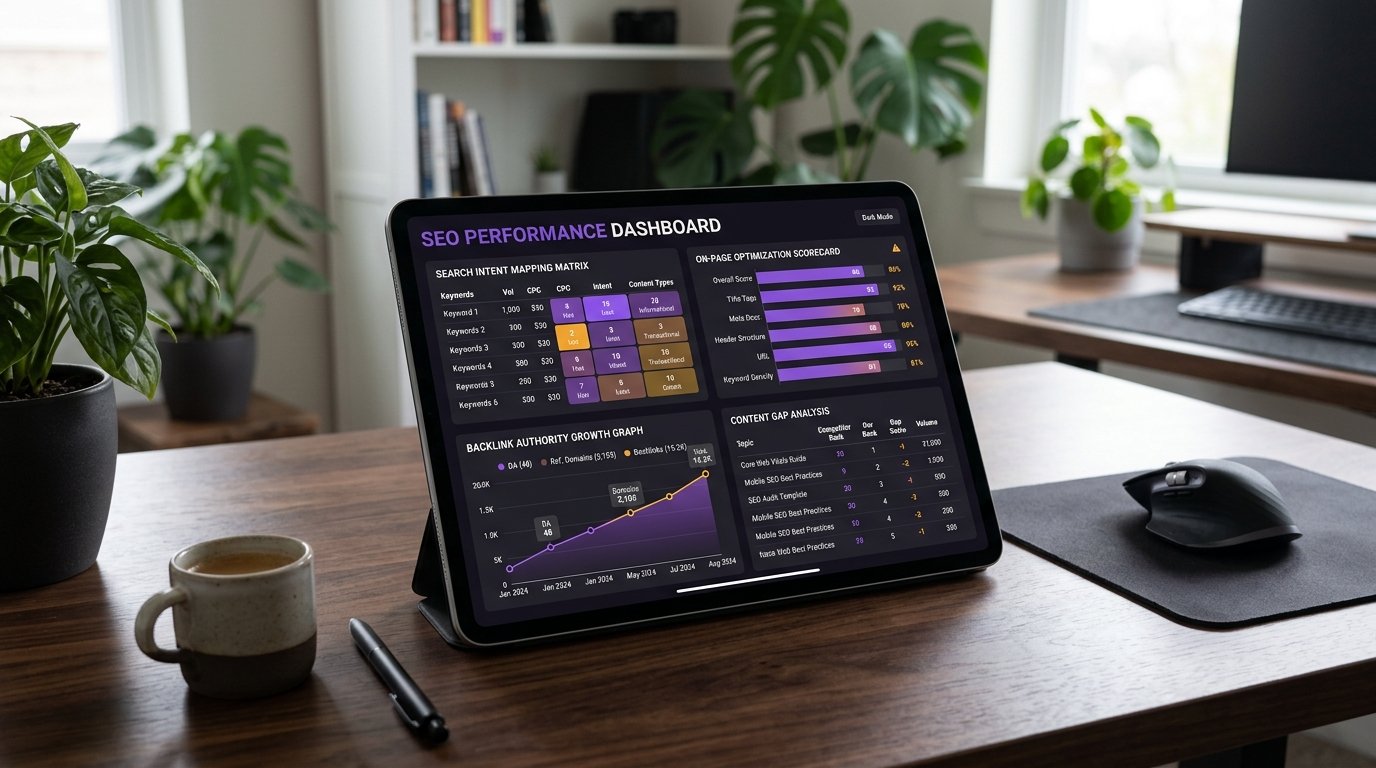
On-page SEO includes title tags, headings, internal links, meta descriptions, and keyword placement. If these basics are missing, search engines may struggle to understand what your page is about. That can reduce your chances of ranking.
This is one of the most common answers to why your website isn’t ranking on Google. Even strong content can underperform if the page structure is poor. Small on-page fixes often create meaningful improvements alongside clear search engine optimization in digital marketing.
8. Your Site Structure Is Confusing
A website should be easy for both users and search engines to navigate. If pages are buried too deep or linked poorly, they may not perform well. Search engines like clear structure because it helps them crawl and understand your site.
A good site structure also helps visitors find what they need faster, especially when built with an experienced website designer near me. That means better engagement, which can support SEO performance. Simple navigation often works better than complicated layouts.
9. You Have Weak Backlinks
Backlinks help show that other websites trust your content. If your site has very few quality links, it may be harder to compete for rankings. Search engines still use authority as part of the ranking picture.
The quality of backlinks matters more than the number alone. A few strong, relevant links are better than many weak ones. Building authority takes time, but it is important for long-term SEO growth.
10. Your Pages Do Not Match Search Intent
Search intent is the reason behind a search. If someone wants a guide and your page only offers a sales pitch, the page is unlikely to perform well. Search engines try to match users with the most useful result.
This is another common reason why your website isn’t ranking on Google. Your content should answer the exact kind of question users are asking. When the intent matches, rankings usually improve more naturally, supported by high-converting website copy that turns visitors into customers.
11. Your Site Has Technical Errors
Broken links, crawl issues, wrong redirects, missing tags, and faulty settings can all cause SEO problems. These issues may not be visible to visitors, but they can still affect rankings. Technical SEO is the foundation that supports everything else.
If your site has hidden errors, search engines may not crawl it correctly. That can make even strong content underperform. A regular technical audit by a trusted team offering the best SEO services near me is useful for catching these problems early.
12. You Are Not Building Authority
Google tends to trust sites that show expertise, experience, and consistency. If your brand is weak, inactive, or unclear, rankings can be harder to win. Authority matters especially in competitive niches.
You build authority through useful content, brand signals, backlinks, reviews, and consistent updates, including an active Google Business Profile ranking for local search. If your website looks abandoned or incomplete, that can hurt trust. Strong authority often supports stronger rankings over time.
Comparison Table
| SEO Mistake | What It Does | How It Hurts Rankings |
|---|---|---|
| Not indexed | Google cannot find the page | The page cannot appear in results |
| Slow site speed | Visitors leave faster | Weak user experience and lower engagement |
| Poor mobile design | Hard to use on phones | Search engines may rank it lower |
| Thin content | Not enough useful information | Page lacks value compared with competitors |
| Duplicate content | Repeats the same message | Confuses Google about which page to rank |
| Wrong keywords | Attracts the wrong audience | Traffic does not match business goals |
| Weak on-page SEO | Missing titles, headings, and structure | Search engines may not understand the page |
| Poor site structure | Pages are hard to navigate | Crawling and user experience suffer |
| Weak backlinks | Low authority signals | Harder to compete against stronger sites |
| Wrong search intent | Page does not answer the query | Visitors bounce and rankings weaken |
| Technical issues | Crawl and usability errors | Search engines may struggle to index pages |
| Low authority | Weak trust and branding | Hard to rank in competitive searches |
Final Thoughts
If you are wondering why your website isn’t ranking on Google, the answer is usually hidden in one or more of these common mistakes. Most SEO problems come from weak content, technical issues, poor structure, or the wrong keyword strategy.
The best approach is to fix the basics first. Make sure your pages are indexable, fast, mobile-friendly, useful, and clearly optimized. Once those pieces are in place, your rankings have a much better chance of improving. If you need a comprehensive technical and content audit for your platform, schedule a discovery session with our engineering team.